Pet Insurance · Service Design · Service Innovation

Pumpkin Visit Pass

Pet insurance present before, during, and after the vet appointment.

Pumpkin Visit Pass hero — the pass as it lands with the pet parent
Role
Lead, Product Strategy & Experience
Client
Pumpkin
Tags
Service Design · Service Innovation
Year
2025–2026

The setup

Pumpkin sells pet insurance for cats and dogs. PumpkinNow pays the vet bill in minutes, but it runs at the counter, after services are rendered.

For about a third of pet parents, even that speed stalls — the pet's health history hasn't been reviewed in time, and the wait lands in an already high-stakes moment.

Pre-visit didn't exist. We set out to build for the appointment itself, so readiness could happen before the pet parent reached the vet.

Contribution

Led service and product strategy across the customer-facing visit pass, the pre-visit experience that hands it to the pet parent, and the backstage processes that get them ready for the appointment and the payment that follows. Main focus: pivoting the team's hypothesis when "deliver coverage certainty pre-visit" stopped fitting the constraints, and building the four-pillar frame that replaced it.

The starting question

The first hypothesis was the obvious one. Build it as the place a pet parent could see, in dollars, what Pumpkin would cover for the upcoming visit. Three constraints made that untenable.

Translation

Pet parents ask service-shaped questions. Our coverage data is condition-shaped — about 1,000 adjuster labels. No clean way to map "my dog's ear infection" onto that list.

Instability

About 81% of visits are for new symptoms. The only real answer is a preauthorization, and we can't issue one in the moment without the pet's medical history in hand.

Operations

Confirming coverage means waiting on records from another vet's office. There's no timeline we can guarantee.

"It depends" is not what a pet parent walks into a vet's office with.

Confidence without certainty

Pet parents told us, in surveys and in vet-side research, that they want to walk into the vet confident, not anxious. Confidence does not require certainty. It requires the four things certainty had been standing in for.

Comprehension

Help them understand how their plan works for this specific visit, not for insurance in general. Deductible status, plan utilization, what changes when they file.

Transparency

Surface what we know and what we don't. A "your records are being reviewed" status with no false guarantees is more useful than a fabricated coverage verdict.

Readiness

Quietly do the work that makes them ready: bank set up, health history reviewed, appointment details on file. They should arrive prepared, whether or not they noticed the preparation.

Continuity

Be present before, during, and after the visit. Make presence tangible — something the pet parent can pull up at the front desk, in the exam room, on the way home. The pass is that through-line: one object that updates as the visit moves.

The pass as the medium

The Visit Pass carries all four pillars in one object. Its role changes as the appointment unfolds.

Pre-visit

The pass shows what's confirmed and what's still open. Coverage stays a status — "your records are being reviewed" — not a verdict.

Mid-visit

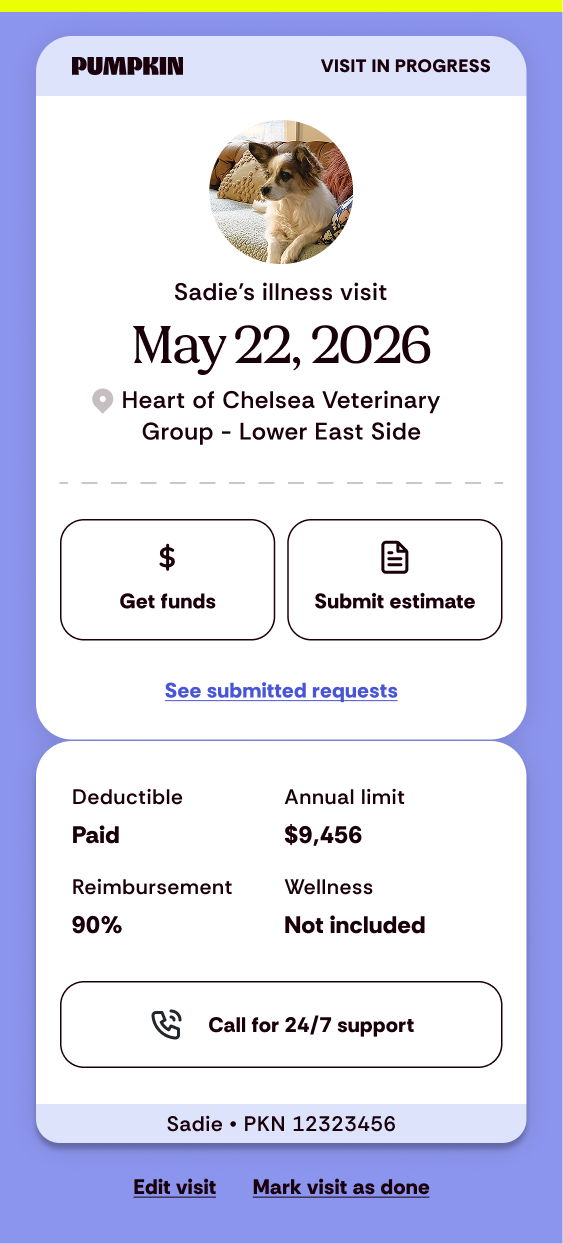
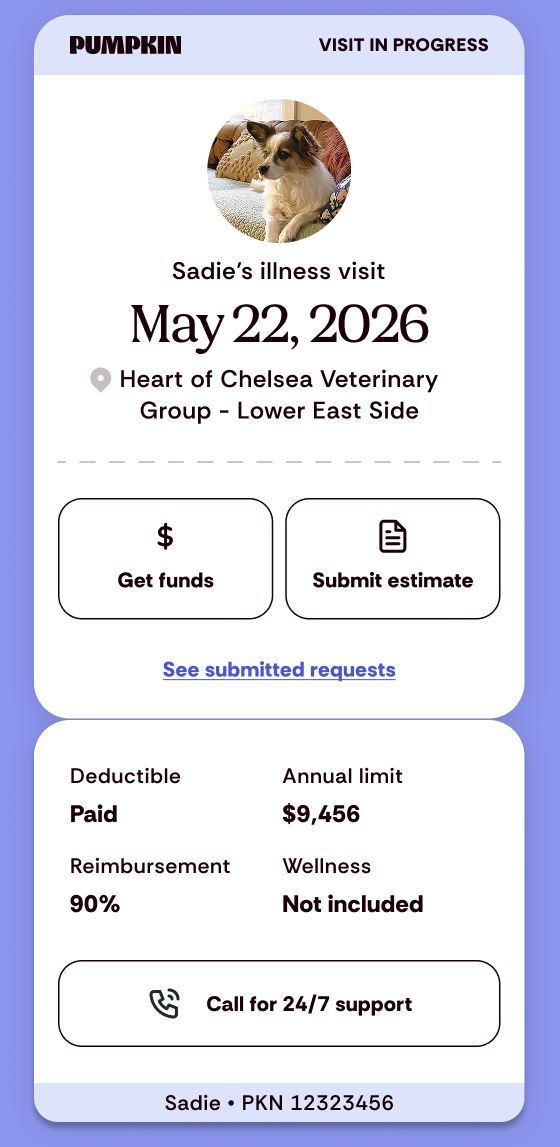
The pass shifts to one-handed actions for the exam room: a visit-in-progress badge, an estimate to submit, support one tap away.

Post-visit

The pass closes the loop. Funds sent, claim resolved, transcript intact.

Notably absent in any state: a coverage verdict in dollars. That refusal is what keeps the rest credible.
Designing the pass

Two design moves shaped the pass. The interactive prototype came first, an exploration of the full vision — something the team could pressure-test before deciding what to keep. The wireframe came after, as a refinement: stripping the design back so the most important information and controls land first. Tangibility mattered. So did being usable in a moment of stress, when a pet parent doesn't have patience to scan a busy screen. The discipline was not adding noise when it's too easy to add.

Interactive prototype, the full vision the team aligned around.
Refinement after the prototype. The most important information and controls land first, designed to be usable in a moment of stress.

What shipped is a slice of the prototype. We held the parts we could prove credible and deferred the rest.

How it shows up

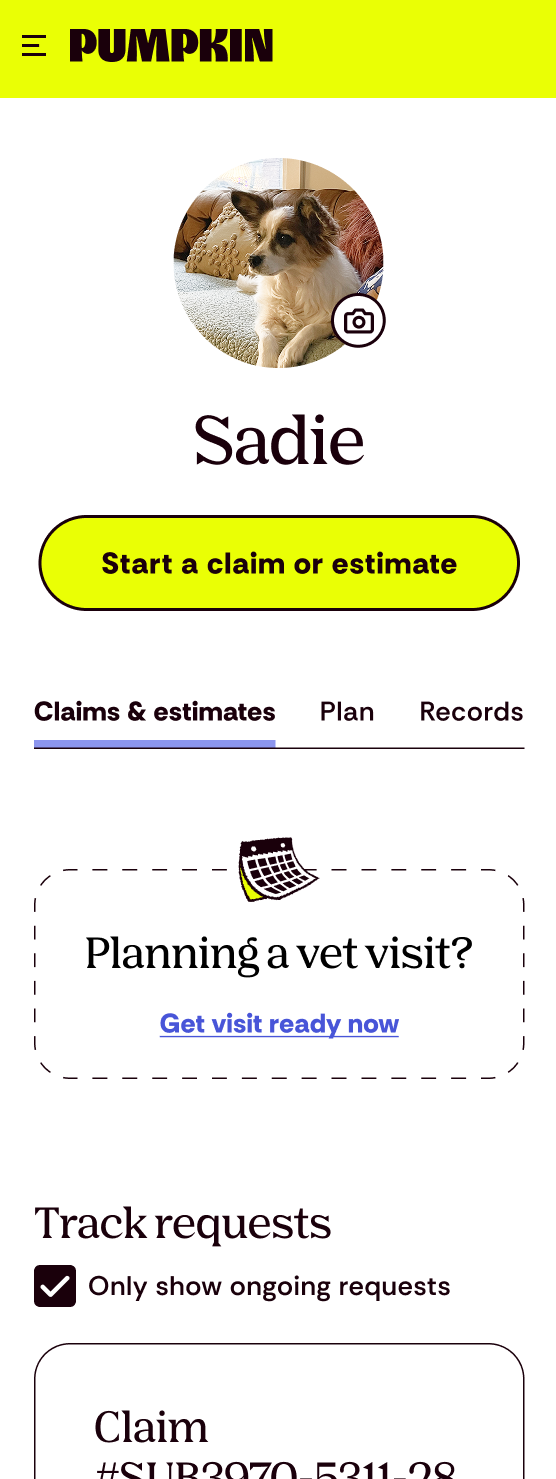
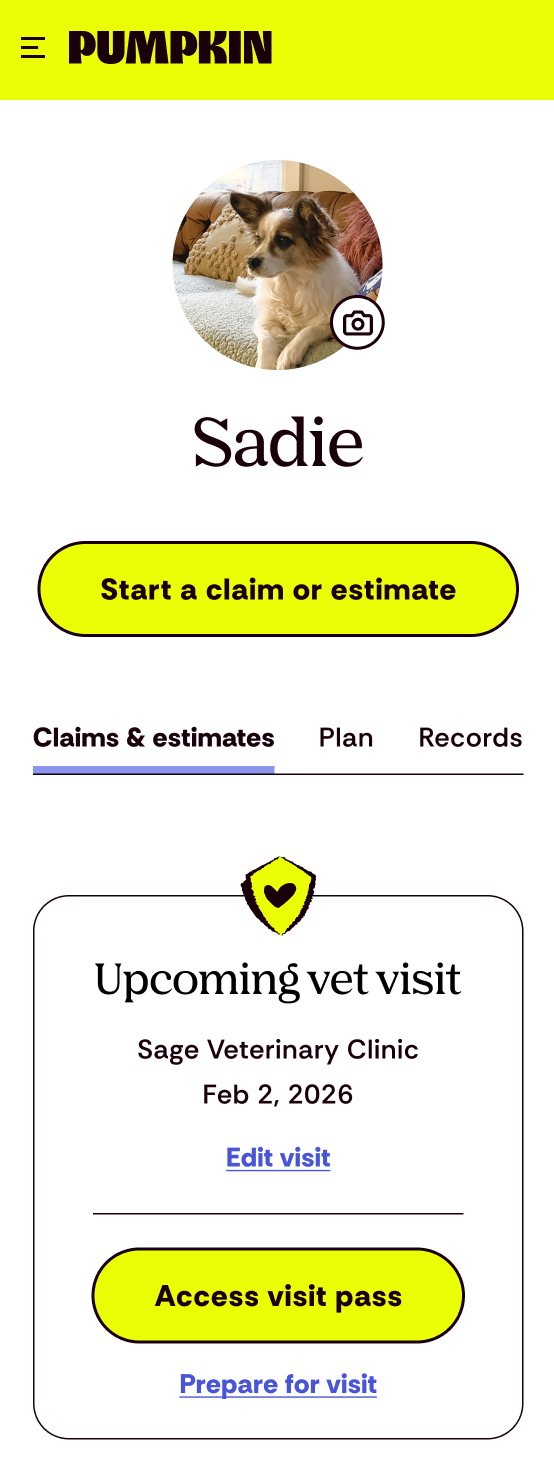
Pre-visit threads into the existing experience as an Upcoming vet visit card on the Claims & estimates tab. From there it's a short flow: tell us about the visit, get a readiness screen back, and the pass updates as the team gets ready behind it.

Claims & estimates tab with a Planning a vet visit? card linking to Get visit ready now

Before. The empty-state CTA on the existing tab.

Claims & estimates tab with the Upcoming vet visit card showing Edit visit, Access visit pass, and Prepare for visit links

After. One card on a tab the pet parent already uses.

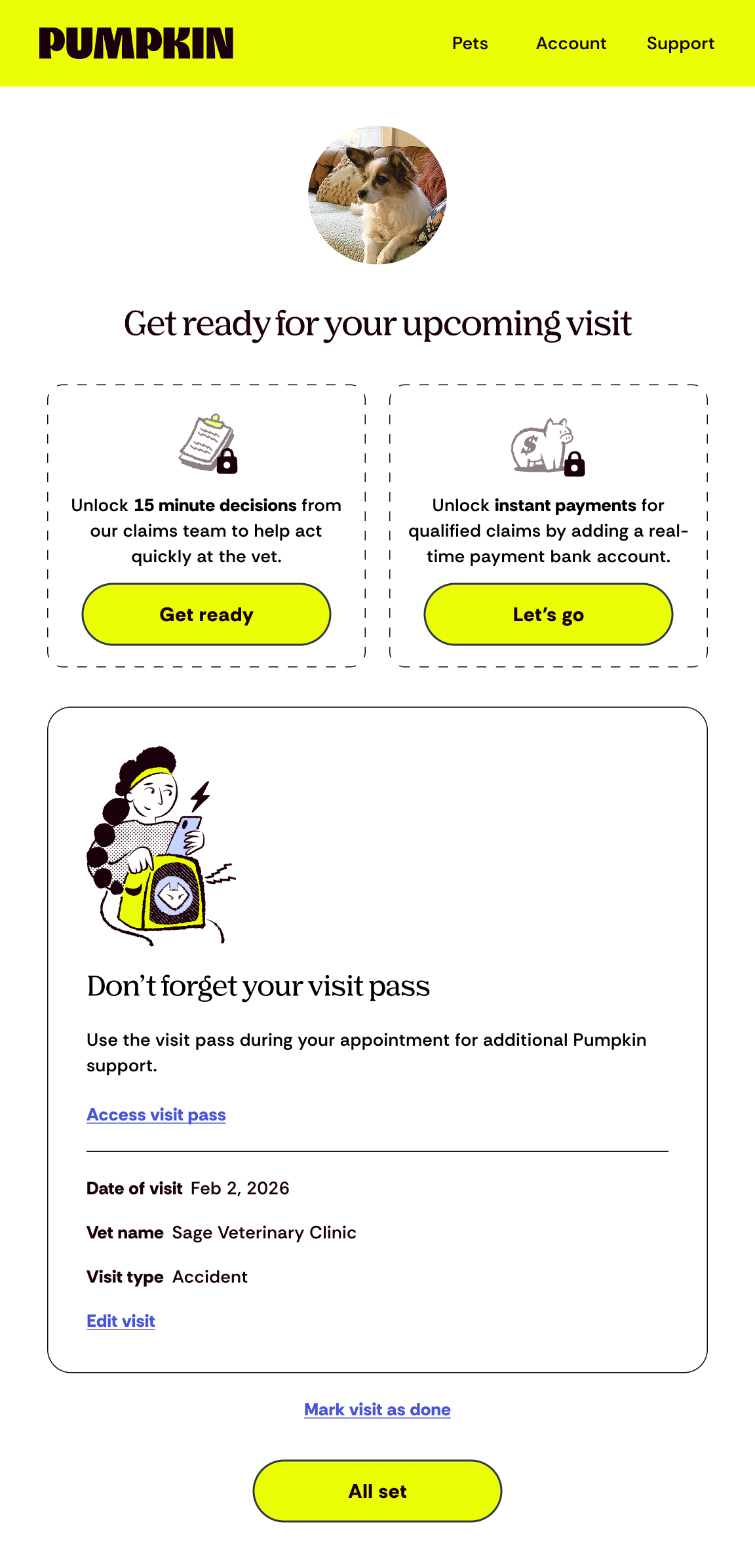
Get ready for your upcoming visit page with two readiness unlock cards (15-minute decisions and instant payments) and a Don't forget your visit pass section with appointment details

What the pet parent gets back. Confirms what's locked in and points to the pass.

Visit pass — pre-visit state with vet, appointment, plan status, and records review

What they carry into the appointment. The pass.

The engine behind it

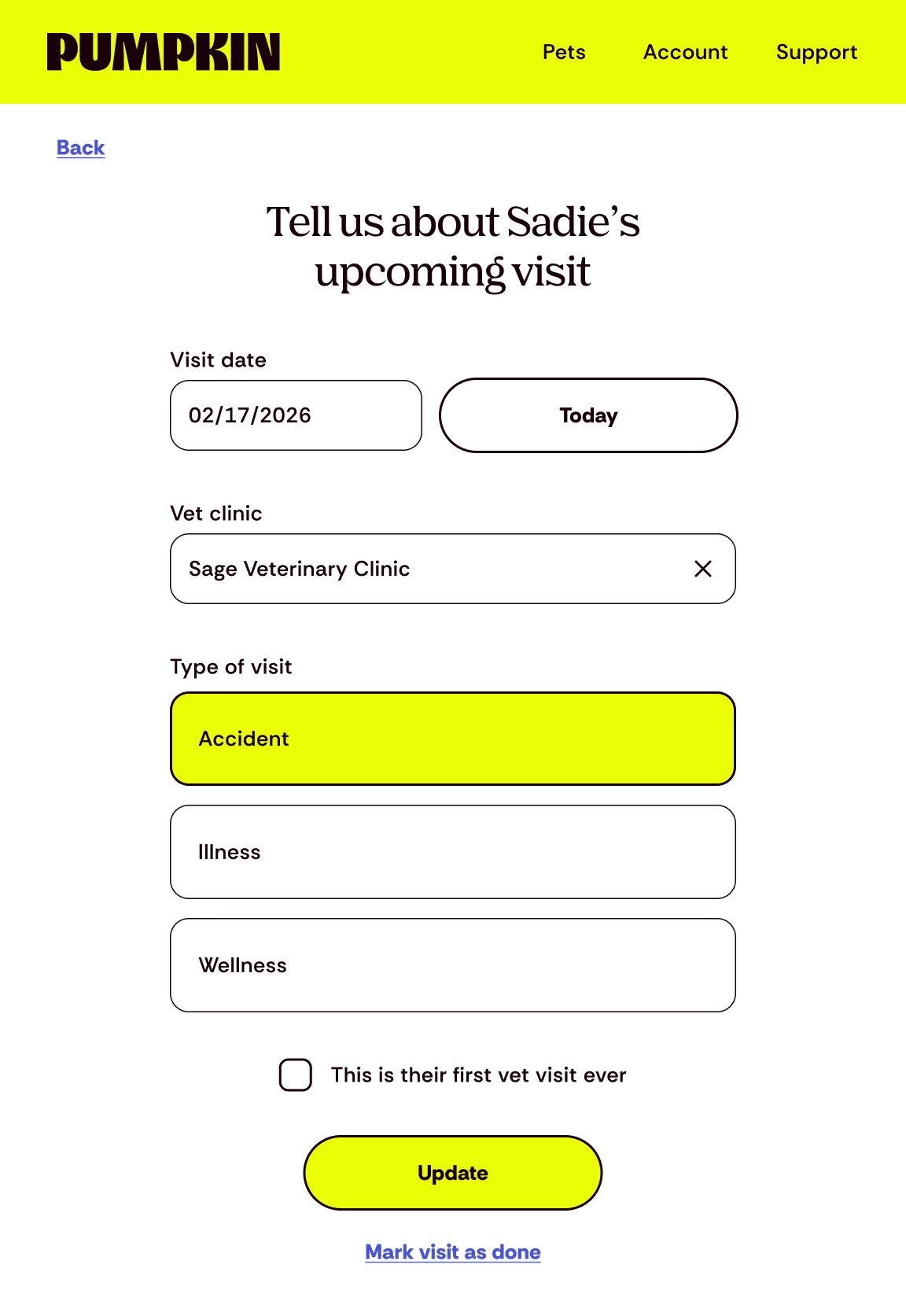
Form titled Tell us about Sadie's upcoming visit with fields for visit date, vet clinic, and visit type with Accident selected

What the pet parent fills in. The appointment becomes the trigger for the off-screen work.

The pass tells the truth about readiness because of work the team does off-screen. Medical record review (pulling and reviewing a pet's history from prior vets) used to happen at claim time. For about 65% of active pets, the review hadn't happened yet.

We moved it earlier, for qualifying appointments, before the customer leaves for the vet. The customer sees one phrase on the pass: "your records are being reviewed." Same volume of work, just shifted forward.

Reflection

The "deliver coverage certainty" hypothesis was hard to put down. I, like the rest of the team, was emotionally invested in a number, because numbers feel like the most honest expression of insurance value. They aren't, not in this category, not without a real preauthorization behind them.

I'd put the four-pillar frame in front of the team earlier. The constraints weren't a problem to design around — they were the brief.

The pass is in market and the team is watching preventable readiness blockers at the next claim filing: bank not set up, history not reviewed. That measures whether the operational engine ran. It does not measure whether the pet parent felt confident in the exam room, and we don't yet have a clean instrument for that.

The biggest open question is behavioral. Pet insurance has trained people to engage reactively, after the bill. The pass asks them to engage before. Awareness, opportunity, and expectation-setting matter as much as the pass itself, and the longer-term effects will take a cycle or two to show up.