The problem
Working in libraries and cafés was about the passive presence of others. Typing nearby, pages turning, chairs shifting. You weren't collaborating, but you weren't alone. Remote work erased that.
Video tools like Focusmate addressed isolation but created privacy concerns. Ambient sound apps like SoundOfColleagues played office noise but treated it as configurable background, disconnected from actual people. Neither tied sound to others in a shared space.
The question
Can a sound-based virtual space recreate the feeling of a library or café — working alone, but not alone?
Design through research
We surveyed people who worked in public spaces. What indicates others are focused? Non-verbal activity ranked highest: typing, writing, page-turning. Higher than faces or posture.
Audo is a browser-based co-working space using spatial audio. We prototyped sound decisions in MAX MSP before building with Resonance Audio.
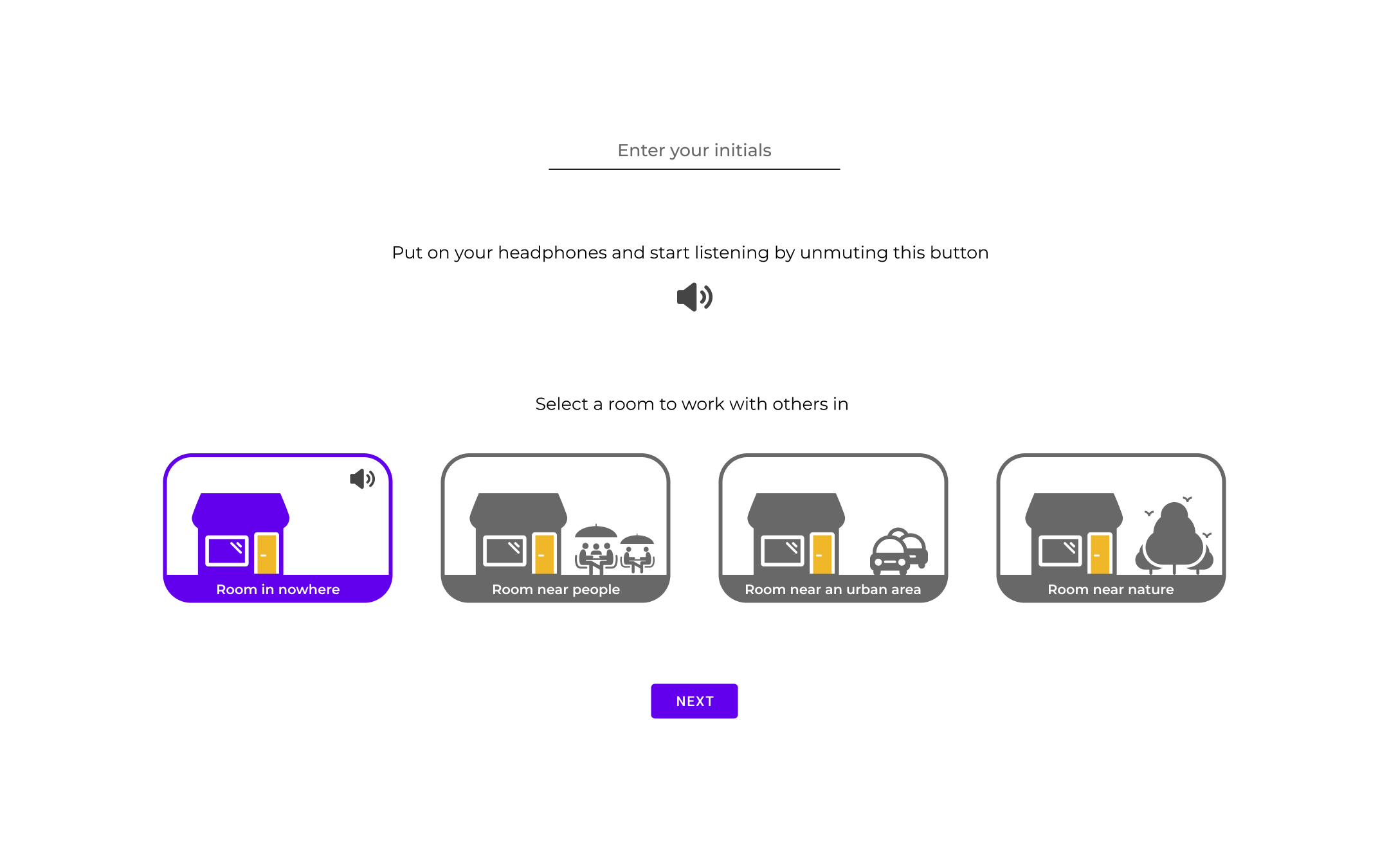
Room selection. Users choose an environment matching their co-working memories.
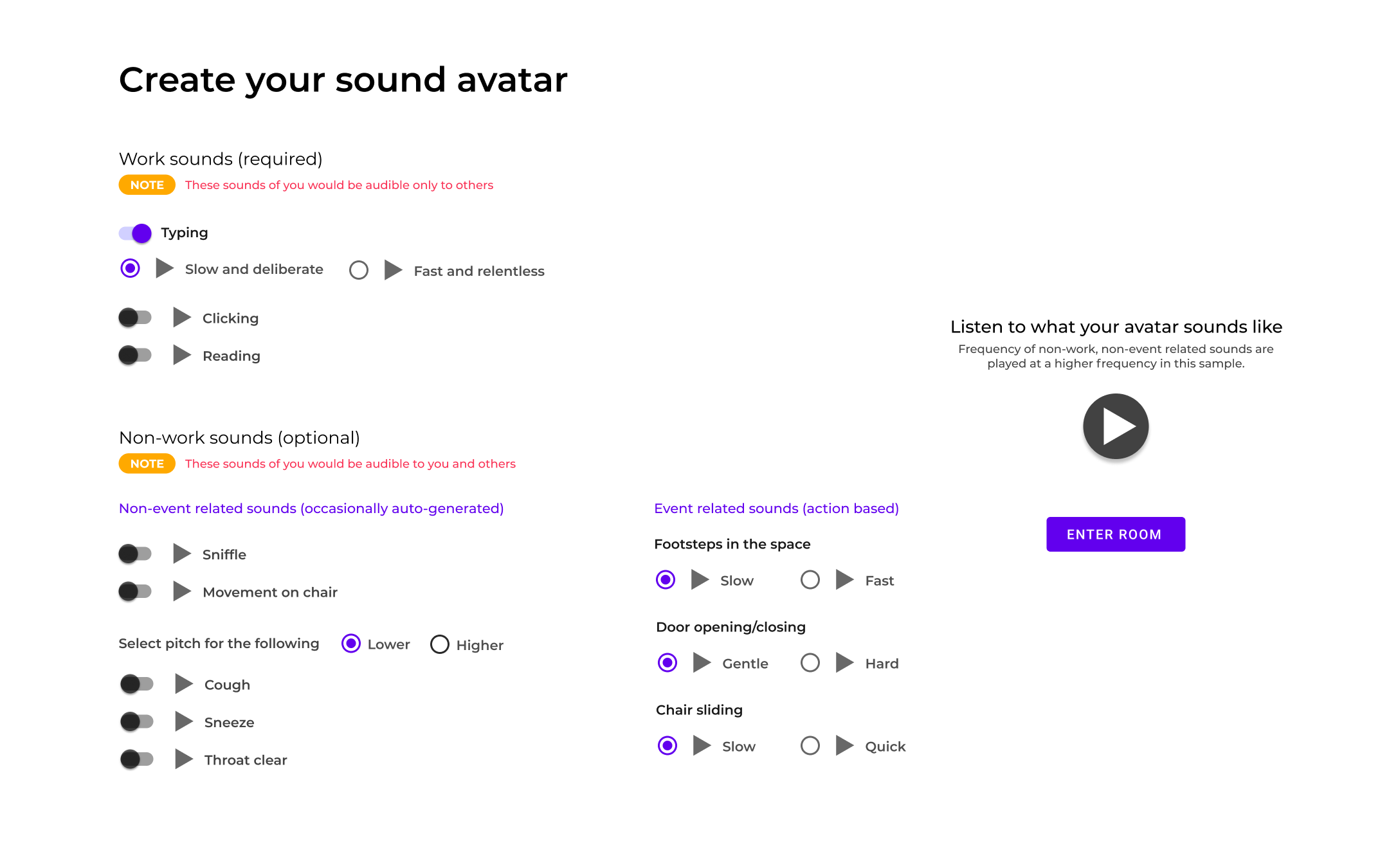
Sound avatar. Users construct an acoustic identity: typing style, chair sounds, how they enter. Sounds generate from actions, not recordings.
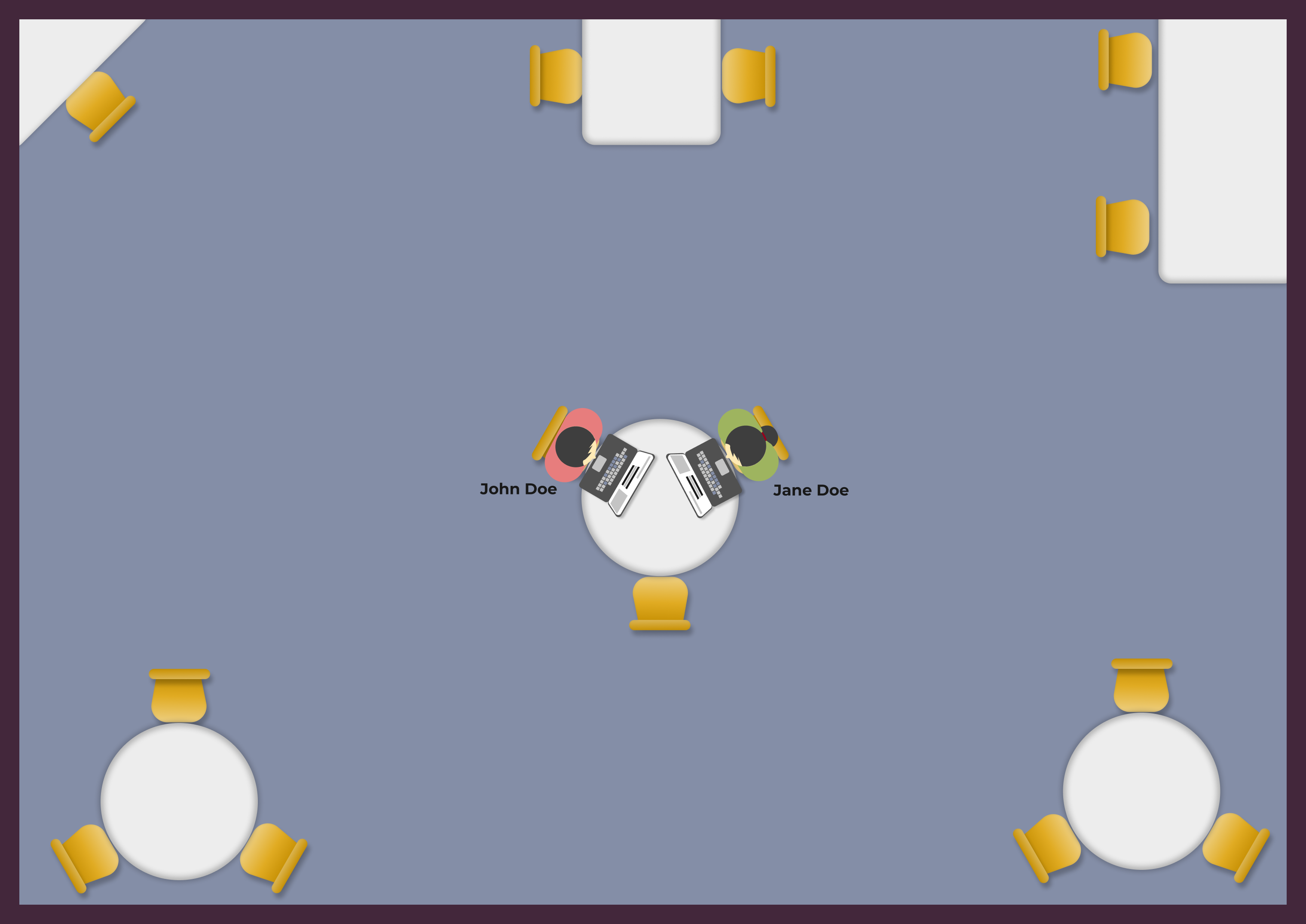
The space. A 2D floorplan where users navigate and select a seat. Sound spatializes as you move, louder as you approach others, shifting as you pass. Table layouts came from testing: too many nearby sources felt noisy, too much separation felt artificial.
Sound narrative. Sequence creates realism: door opening, footsteps, chair, then typing. But strict repetition breaks immersion. We balanced fixed order with randomized pauses and sound variants so the same action never sounds identical twice.
Listen to the spatial audio · Use headphones
Walking through the space, passing others at work.
The surprise
Presence improved. Mental imagery was more vivid. Task motivation improved for monotonous work. But co-presence didn't. Users could hear others but had no sense of being heard back.
Setup became a transition ritual
Selecting a room, creating an avatar, choosing a seat. Users described this as preparation for work. The steps before work became part of the ritual.
Building identity made others feel real
Customizing a sound avatar changed how users perceived others. If I built an intentional presence, so did they.
Customization prompted social consideration
Users balanced self-expression with choosing sounds that wouldn't annoy others. Building a presence made them consider their impact.