The confidence problem
Cakes aren't normal e-commerce. You're buying a product that will be made after you order, for an event that matters. You can't try it first, can't return it if it's wrong, and often you're ordering on behalf of someone else. The existing Carvel ordering experience forced decisions before users had enough information to feel confident.
Contribution
Led end-to-end design for cake selection flows, from research through final prototype. Focused on reducing commitment anxiety by letting users explore before deciding and see before finalizing.
The problem
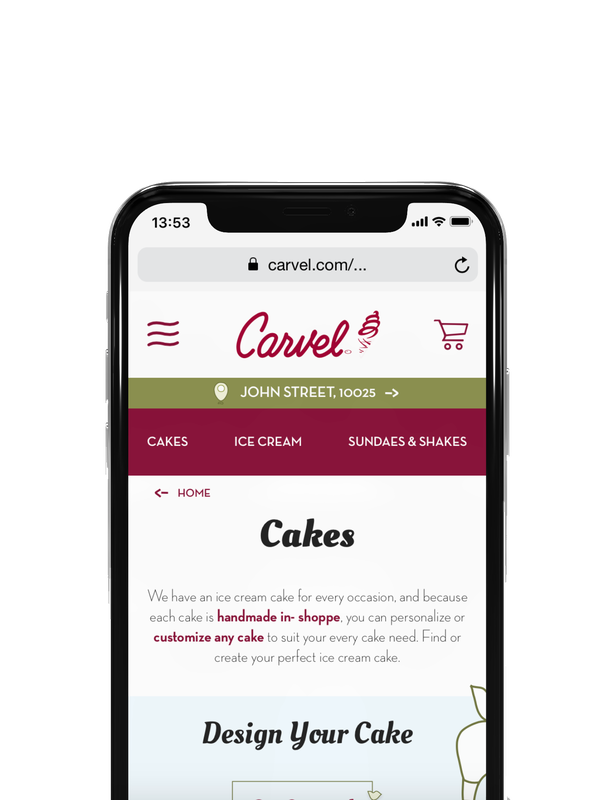
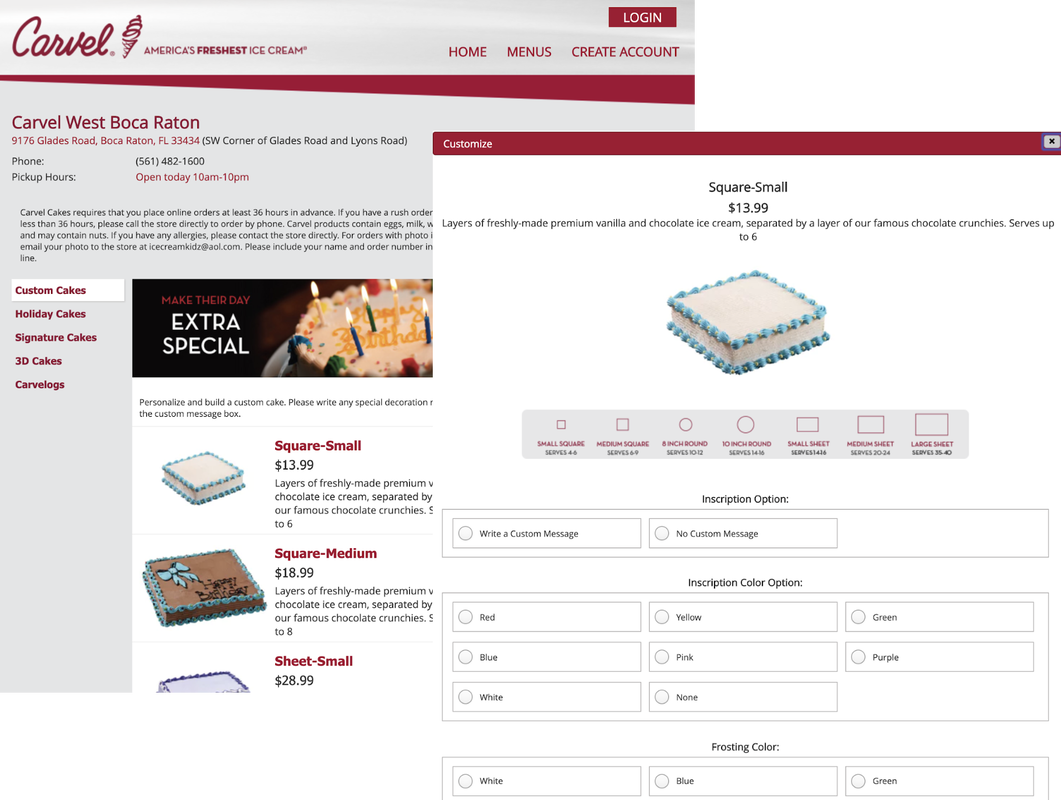
Carvel's website showcased cakes but routed transactions to a third-party platform. Users had to select a store before they could see what was available or how much it cost. Custom cake building happened through dense forms with no preview of the result.
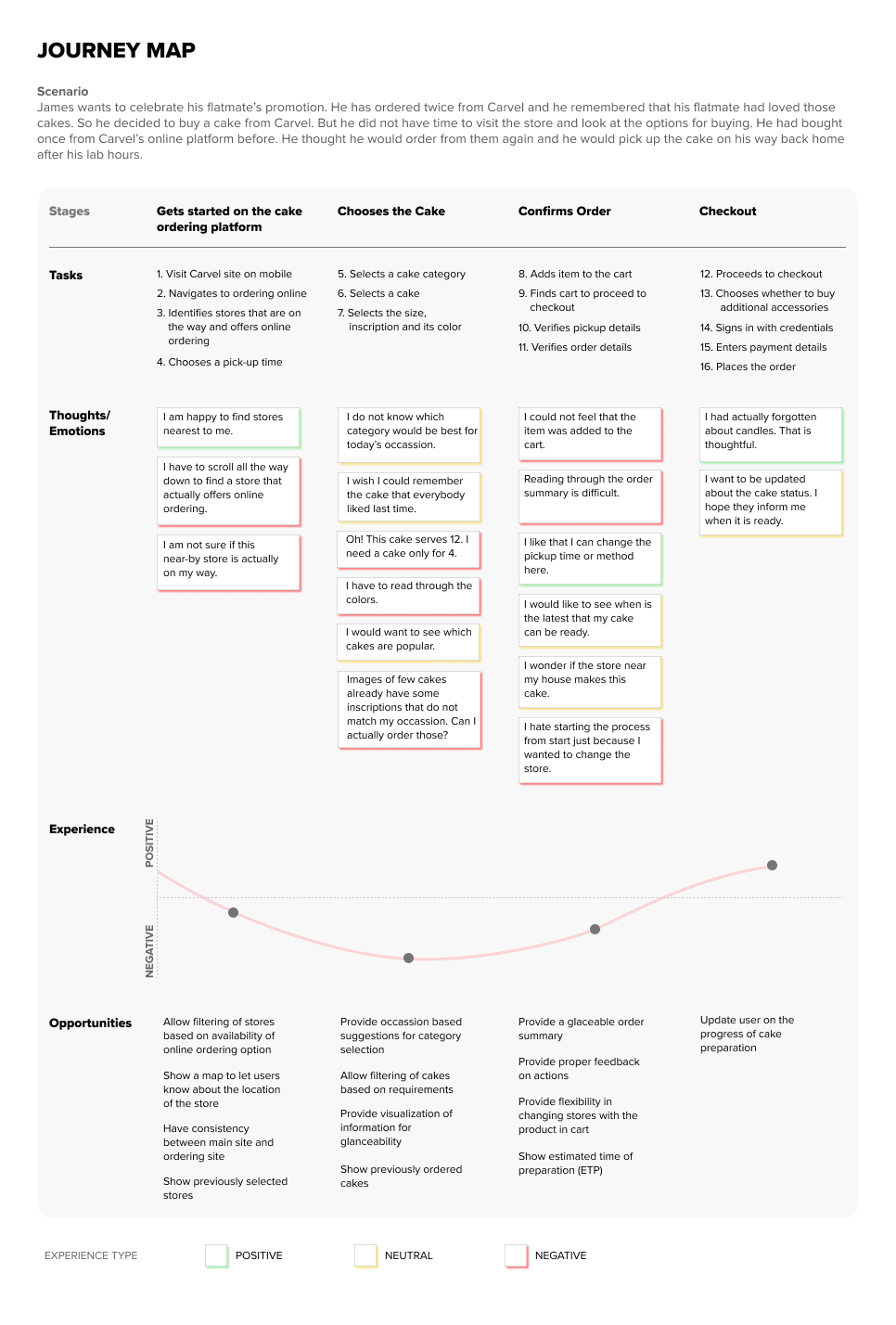
Journey mapping showed where confidence broke down. Users started optimistic but hit friction during category selection ("I do not know which category would be best for today's occasion") and customization, only recovering at checkout when they could finally review everything.
Pre-made cake selection
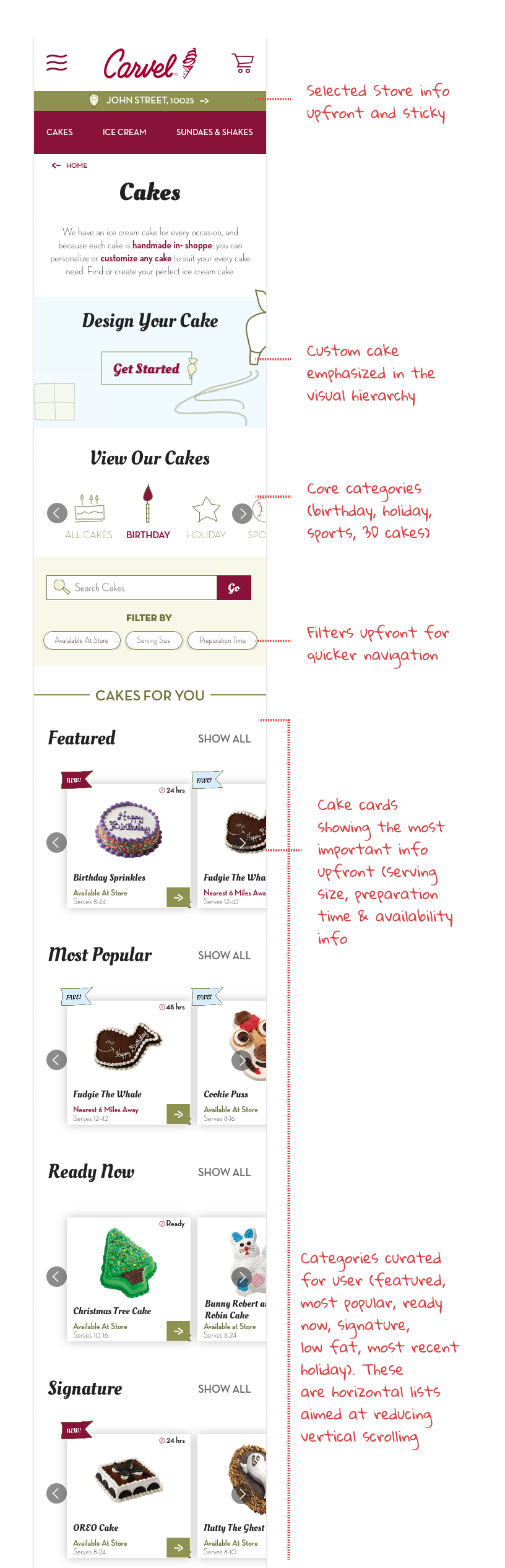
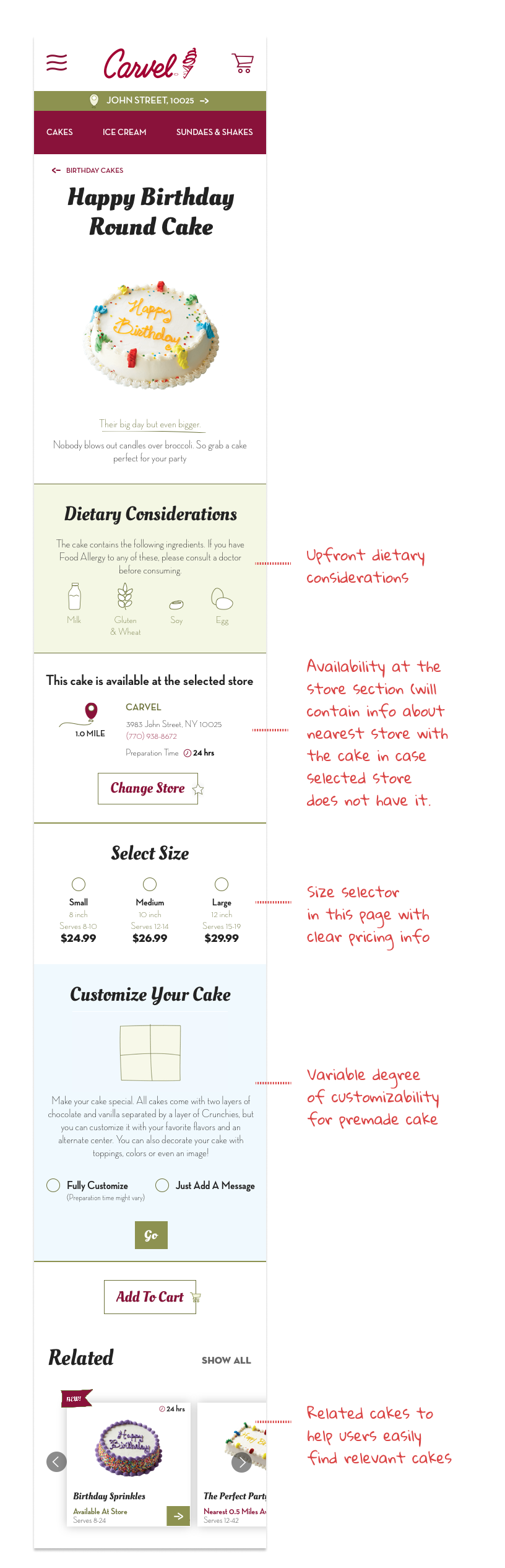
The landing page lets users browse without selecting a store first. Cakes are organized into scannable categories with preparation time and availability visible on each card. The details page surfaces dietary info and store availability upfront, and separates quick personalization (just add a message) from full customization.
Custom cake builder
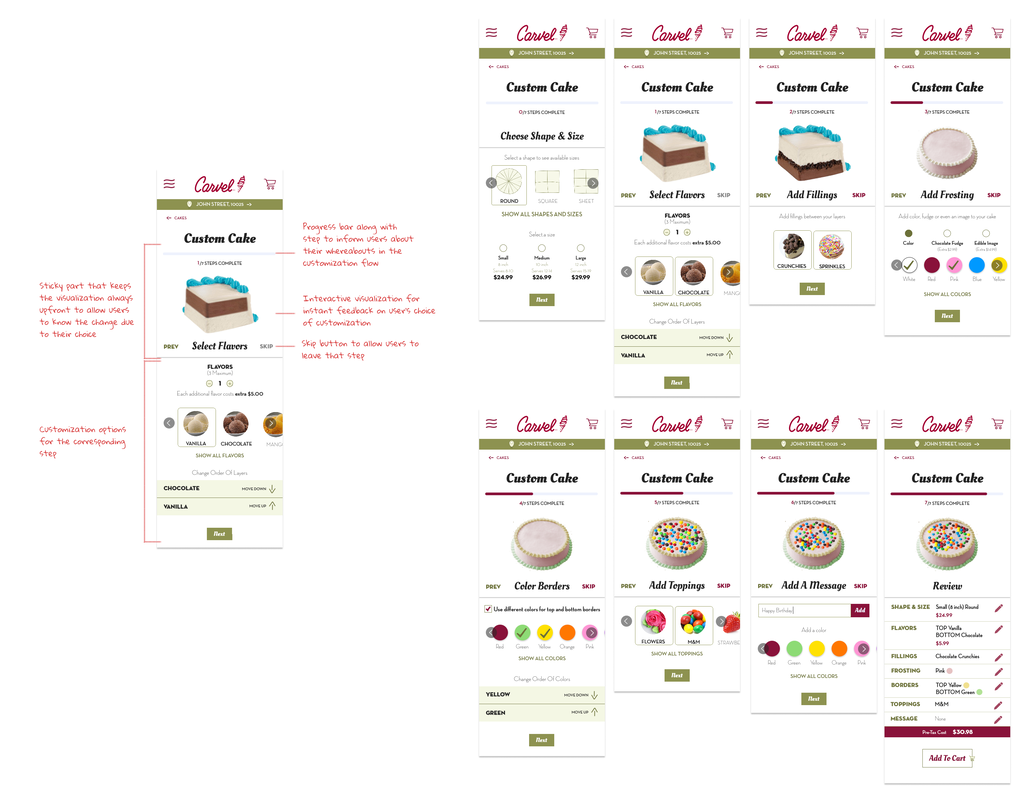
The original flow was a long form where users filled in options without seeing how their choices combined.
Principles
Three ideas guided the redesign:
Confidence before commitment
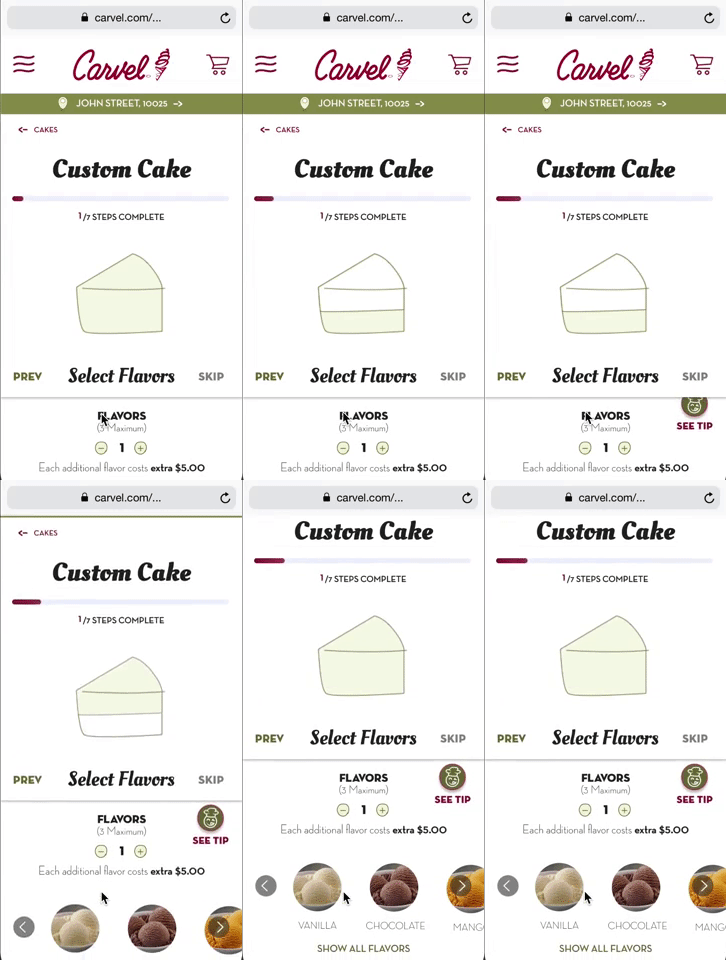
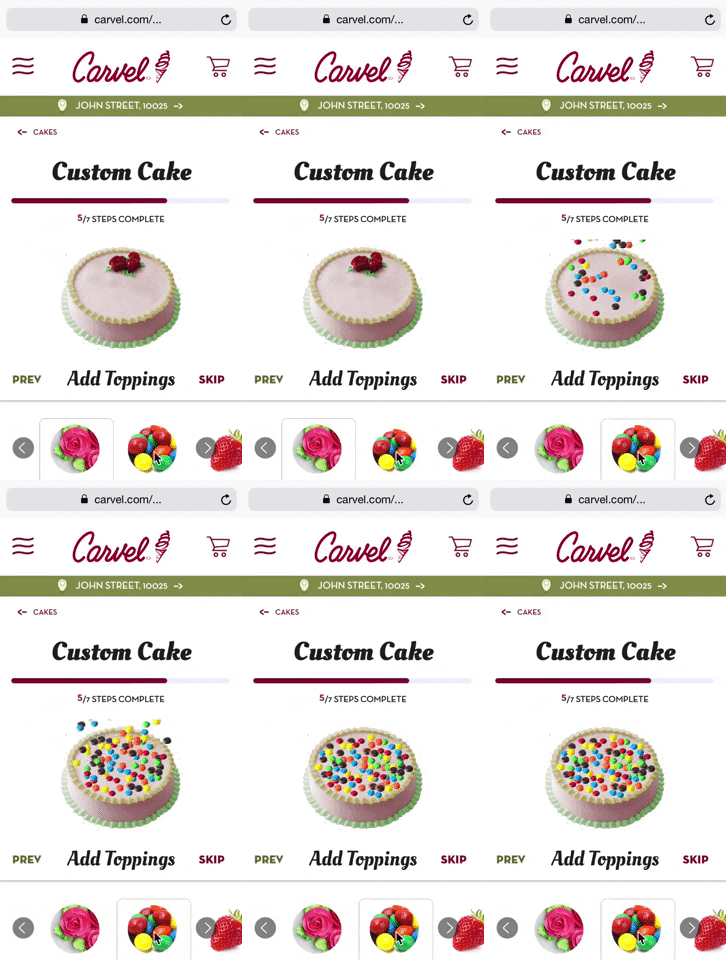
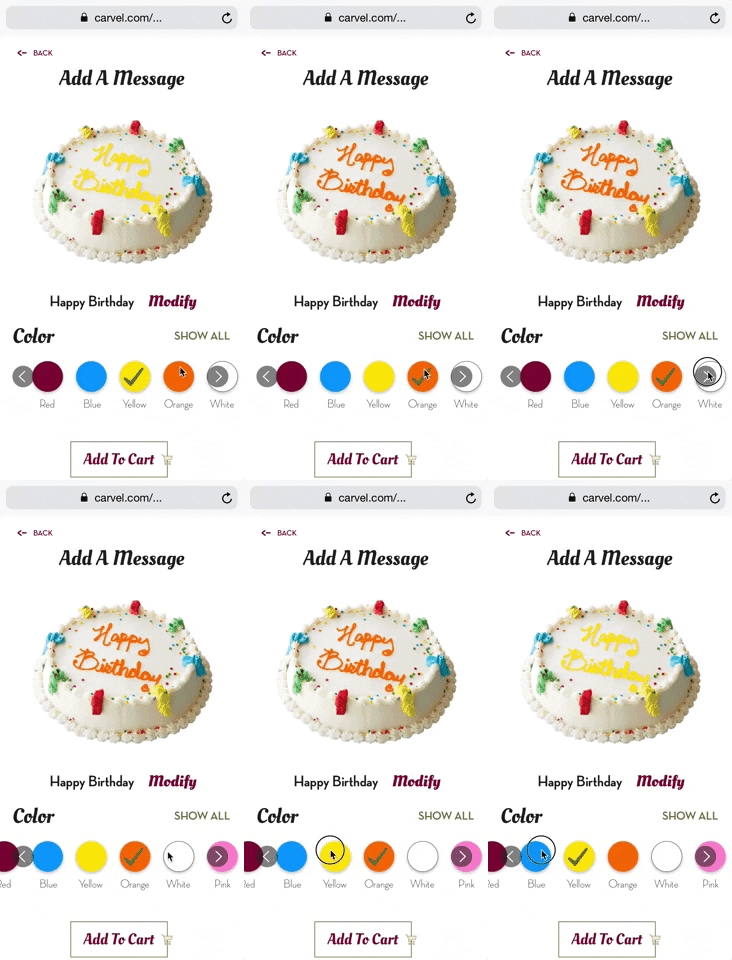
Let users explore before requiring them to decide. In the pre-made flow, this meant browsing without store selection. In the builder, it meant showing the cake updating live so users could adjust before finalizing.
Progressive disclosure
Break complex decisions into steps. The custom builder moves through one question at a time, with clear navigation back if users change their mind.
Visual feedback
Show what they're getting as they configure it. For a product that doesn't exist yet, seeing matters more than describing.
Reflection
Cakes carry higher psychological stakes than most e-commerce because they're promises, not products. You're committing to something that will be made for an event that matters. The interface either builds confidence in that promise or undermines it.
The existing system undermined confidence at multiple points: forcing store selection before browsing, hiding availability until late, showing customization as text rather than visual preview. Each created moments where users had to trust the system rather than see for themselves.
This was a capstone project presented to Focus Brands stakeholders. No post-launch metrics available. If I continued this work, I'd want to understand whether the confidence problem extends beyond selection. Does anxiety return at checkout, or while waiting for pickup confirmation?